
Lamella Settler for Industrial Wastewater Treatment
Met-Chem Lamella Settlers & Industrial Plate Settling Systems
Met-Chem designs and manufactures lamella settlers for industrial wastewater treatment applications. Using multiple inclined settling plates, a lamella settler provides a large effective settling area within a compact footprint while continuously separating suspended and chemically precipitated solids from wastewater.
Lamella settlers are also commonly referred to as lamella clarifiers, inclined plate settlers, inclined plate clarifiers, or plate settlers.
Regardless of terminology, the basic principle is the same:
Reduce the distance solids must travel to reach a settling surface while providing a large amount of projected settling area.
Met-Chem designs lamella settling systems around the complete industrial wastewater treatment process, including wastewater chemistry, flow, solids loading, flocculation, settling characteristics, retention time, sludge production, and downstream dewatering.
What Is a Lamella Settler?
A lamella settler is a gravity separation device that uses multiple parallel inclined plates to separate suspended solids from water.
In a conventional settling tank, suspended particles must settle toward the bottom of the tank.
A lamella settler places multiple settling surfaces throughout the water column.
This dramatically reduces the distance a particle must travel before reaching a settling surface.
Once suspended solids reach an inclined plate, they collect with other particles and form a heavier layer of sludge.
Gravity causes this accumulated material to move down the inclined plate.
The sludge eventually falls from the bottom of the plate pack and collects in the sludge cone.
Meanwhile, clarified water continues upward through the plate section and exits from the top of the settler.
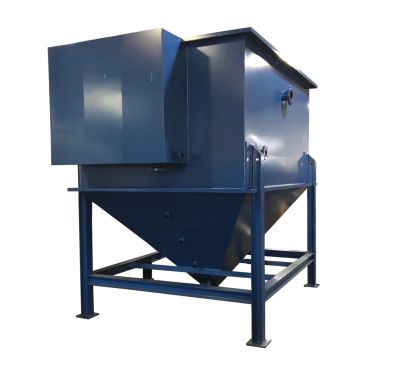
What Is a Lamella Settler?
A lamella settler is a gravity separation device that uses multiple parallel inclined plates to separate suspended solids from water.
In a conventional settling tank, suspended particles must settle toward the bottom of the tank.
A lamella settler places multiple settling surfaces throughout the water column.
This dramatically reduces the distance a particle must travel before reaching a settling surface.
Once suspended solids reach an inclined plate, they collect with other particles and form a heavier layer of sludge.
Gravity causes this accumulated material to move down the inclined plate.
The sludge eventually falls from the bottom of the plate pack and collects in the sludge cone.
Meanwhile, clarified water continues upward through the plate section and exits from the top of the settler.
How Does a Lamella Settler Work?
The operation of a lamella settler can be understood as two opposing movements:
Water moves upward.
Solids move downward.
Chemically treated wastewater enters the clarification section below the inclined plate packs.
The wastewater is distributed across the available settling area and begins moving upward between the parallel plates.
Suspended particles settle toward the plate surfaces.
Once they contact a plate, the solids begin accumulating and combining with other particles.
As this layer becomes heavier, it moves down the inclined plate under gravity.
The solids fall into the sludge collection cone while clarified water continues upward toward the effluent weirs.
This allows a lamella settler to continuously separate suspended solids from wastewater.
Why Does a Lamella Settler Use Inclined Plates?
The primary advantage of the lamella design is the ability to place a large amount of settling area within a relatively small tank.
Imagine a conventional settling tank with one horizontal settling area.
Now place numerous parallel settling surfaces inside the same tank.
Each plate provides additional projected settling area.
This allows a lamella settler to provide significantly more effective settling area without requiring the footprint of a much larger conventional settling basin.
For industrial facilities where floor space is valuable, this can be a major advantage.
Shorter Settling Distance
One of the most important advantages of a lamella settler is the reduction in particle settling distance.
Without plates, a suspended particle may need to travel several feet before reaching the bottom of a settling tank.
Inside a lamella plate pack, the particle only needs to travel the distance between adjacent plates before reaching a settling surface.
This shorter settling distance allows the clarifier to make much more efficient use of its available tank footprint.
The plate pack does not make gravity stronger.
Instead, it places a settling surface much closer to the suspended particle.
60-Degree Lamella Settling Plates
Met-Chem commonly uses parallel settling plates installed at approximately 60 degrees from horizontal.
Plate angle is important because the plate must accomplish two functions.
It must provide projected settling area, and it must allow collected solids to move downward.
At approximately 60 degrees, the plate remains steep enough for accumulated sludge to slide toward the bottom of the plate pack.
If plates are positioned at too shallow an angle, some industrial solids may be more likely to accumulate rather than move downward.
Met-Chem therefore considers both settling performance and sludge movement when designing a plate pack.
Lamella Settler Projected Area
The capacity of a lamella settler is related to its effective projected settling area.
For a rectangular inclined plate:
Projected Area = Plate Length × Plate Width × cos(θ)
Where:
θ = plate angle from horizontal
For multiple plates:
Total Projected Settling Area = Projected Area per Plate × Number of Effective Plates
For plates installed at 60 degrees:
cos(60°) = 0.50
For example, a plate measuring:
4 ft wide × 8 ft long
has:
32 ft² of physical surface area
At a 60-degree angle, its horizontal projected area is approximately:
16 ft²
Multiply that area across dozens of plates and a substantial amount of effective settling area can be installed inside a relatively compact tank.
Lamella Settler Surface Loading
Wastewater flow can be compared with projected settling area using the surface loading relationship:
Surface Loading Rate = Flow ÷ Effective Settling Area
or:
SLR = Q ÷ A
Where:
Q = wastewater flow
A = projected settling area
As flow increases through the same settling area, the hydraulic loading increases.
If the upward hydraulic velocity becomes too high relative to the settling characteristics of the solids, particles can be carried toward the effluent instead of settling.
This is why a lamella settler should not simply be selected based on a manufacturer's advertised maximum GPM.
Met-Chem evaluates the actual wastewater application when sizing an industrial settling system.
Settling Area Is Only Part of the Design
A large plate pack does not automatically create a good lamella settler.
Industrial wastewater treatment requires consideration of the complete system.
Met-Chem evaluates:
- Average flow
- Peak flow
- Projected settling area
- Solids concentration
- Solids settling characteristics
- Plate angle
- Plate spacing
- Hydraulic distribution
- Wastewater chemistry
- Chemical precipitation
- Flocculation
- Tank volume
- Retention time
- Sludge production
- Sludge removal
A properly designed lamella settler balances settling area, hydraulics, tank volume, and solids handling.
Why Retention Time Still Matters
Inclined plates provide settling area, but they do not eliminate the value of adequate tank volume.
Industrial wastewater can vary considerably throughout a production day.
Changes can occur in:
- Flow
- pH
- Solids concentration
- Metal concentration
- Chemical dosage
- Floc size
- Sludge production
Met-Chem standard industrial clarification systems are commonly designed with approximately 50–60 minutes of hydraulic retention time, depending on configuration.
Additional process volume can help provide a buffer against changing wastewater conditions.
It can also reduce hydraulic disturbances and provide additional time for floc development and solids separation.
For this reason, Met-Chem considers projected settling area and retention time together when designing an industrial lamella settler.
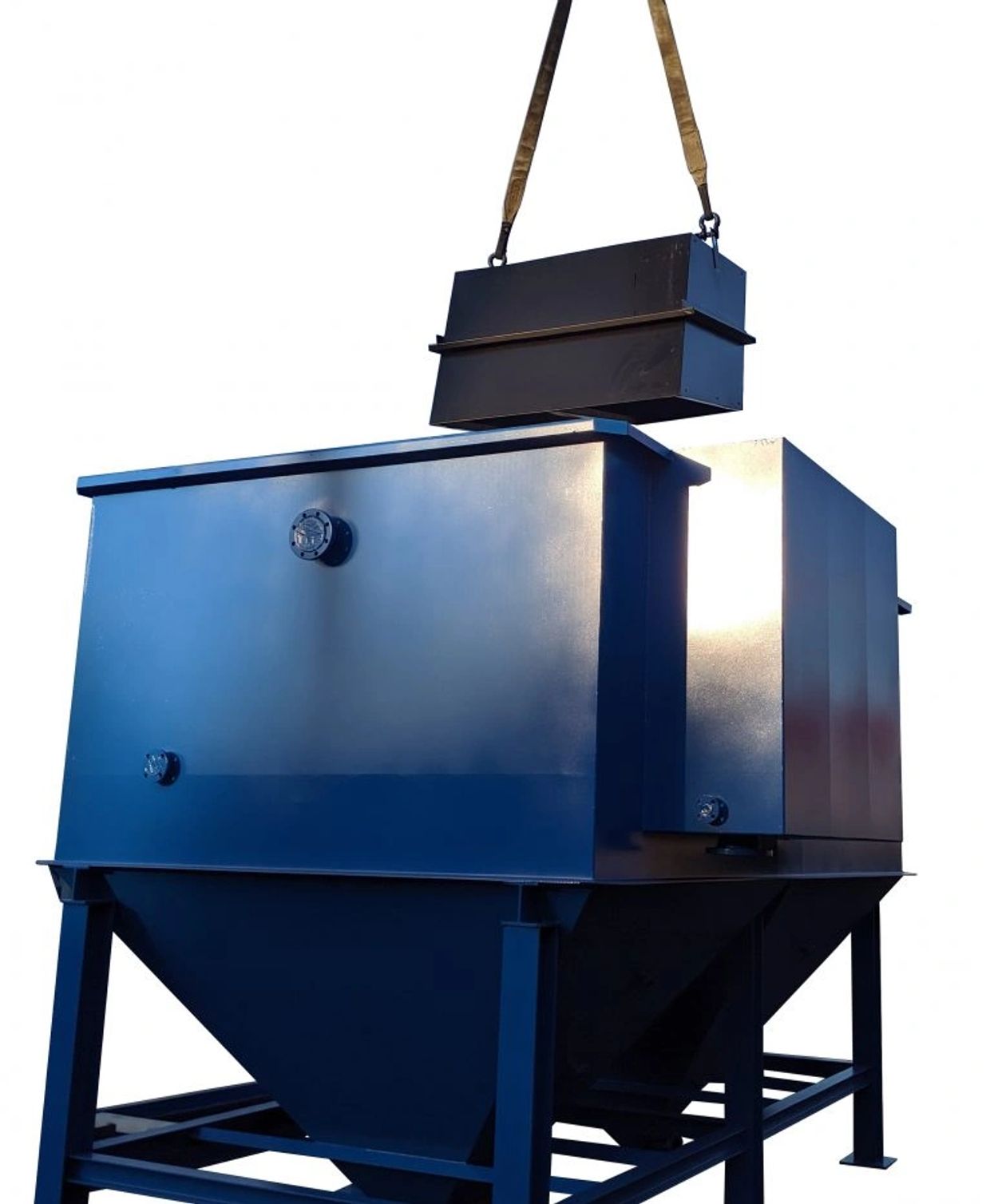
Lamella Settler vs. Lamella Clarifier
The terms lamella settler and lamella clarifier are commonly used interchangeably.
Both describe equipment that uses inclined settling surfaces to separate suspended solids from water.
“Settler” emphasizes the gravity settling process.
“Clarifier” emphasizes the production of clarified water.
In an industrial wastewater treatment system, the same piece of equipment performs both functions:
Solids settle. Water clarifies.
Met-Chem manufactures inclined plate systems for both functions as part of industrial wastewater treatment processes.
Lamella Settler vs. Inclined Plate Settler
A lamella settler and an inclined plate settler generally refer to the same type of equipment.
Other common terms include:
- Lamella Clarifier
- Inclined Plate Clarifier
- Inclined Plate Settler
- Plate Settler
- Parallel Plate Clarifier
- Slant Plate Clarifier
The terminology may change, but the important engineering considerations remain:
plate area + plate configuration + hydraulics + retention time + sludge removal.
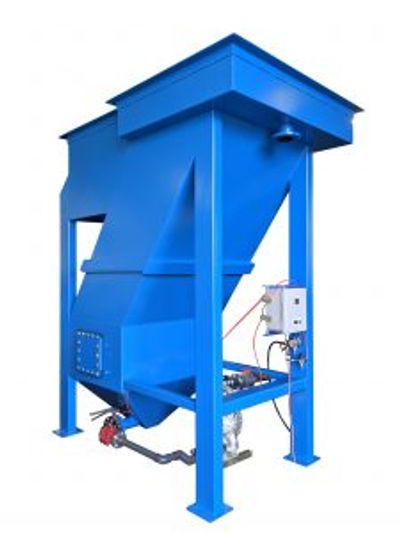
Met-Chem Lamella Settler Sizes
Met-Chem manufactures industrial lamella settling systems in common flow capacities including:
- 30 GPM
- 60 GPM
- 90 GPM
- 120 GPM
- 180 GPM
- 240 GPM
- 300 GPM
Larger and custom systems are also available.
These capacities provide a starting point.
Final equipment sizing should consider the actual wastewater, solids characteristics, settling behavior, peak flow, chemical treatment, and sludge production.
How Do You Size a Lamella Settler?
Lamella settler sizing should consider:
Wastewater Flow
Both average and peak flow should be evaluated.
Projected Settling Area
The inclined plates must provide sufficient effective area for the application.
Settling Characteristics
The floc must settle faster than the upward hydraulic conditions that would otherwise carry it out of the system.
Plate Configuration
Plate length, width, angle, spacing, and quantity affect performance.
Retention Time
Adequate tank volume provides additional hydraulic stability and process flexibility.
Solids Loading
The amount of solids entering or being created by chemical treatment affects sludge production.
Sludge Removal
The sludge must be removed frequently enough to prevent excessive accumulation.
Met-Chem evaluates these factors together when selecting a lamella settling system.
Common Lamella Settler Problems
Cloudy Effluent
Possible causes include poor precipitation, incorrect pH, poor flocculation, excessive flow, or high solids loading.
Solids Carryover
This may indicate that the upward hydraulic loading is too high or that the solids are not settling properly.
Solids Accumulating in the Plates
Possible causes include excessive solids loading, poor sludge removal, unsuitable plate spacing, or solids that do not slide readily.
Excessive Sludge in the Cone
Increase the sludge removal frequency rather than allowing the sludge level to approach the plate pack.
Poor Floc Formation
Review pH, chemical dosage, polymer selection, mixing, and chemical contact time.
Benefits of a Met-Chem Lamella Settler
A properly designed Met-Chem lamella settling system can provide:
- Large projected settling area
- Compact footprint
- Reduced particle settling distance
- Approximately 60-degree inclined plates
- Approximately 50–60 minute retention time
- Integrated flocculation
- Automatic sludge blowdown
- Standard and custom capacities
- Filter press integration
- Complete wastewater treatment capability
The goal is not simply to provide a plate pack.
Met-Chem designs the settling area, tank volume, chemical treatment, sludge handling, and dewatering process to work together.
Lamella Settler Frequently Asked Questions
What is a lamella settler?
A lamella settler is a gravity separation device that uses multiple inclined parallel plates to separate suspended solids from water.
How does a lamella settler work?
Wastewater moves upward between inclined plates while suspended solids settle onto the plates and move downward into a sludge collection cone.
Is a lamella settler the same as a lamella clarifier?
The terms are commonly used interchangeably. The equipment simultaneously settles solids and produces clarified water.
Is a lamella settler the same as an inclined plate settler?
Generally, yes. Both terms describe clarification equipment using inclined settling surfaces.
Why are the plates inclined?
Inclined plates provide projected settling area while allowing accumulated solids to move downward under gravity.
What angle does Met-Chem use?
Met-Chem commonly uses settling plates positioned at approximately 60 degrees from horizontal.
How much retention time does a lamella settler need?
The appropriate retention time depends on the wastewater and system design. Met-Chem standard industrial clarification systems commonly provide approximately 50–60 minutes, depending on configuration.
Can a lamella settler remove dissolved metals?
Not directly. Dissolved metals generally require chemical precipitation before the resulting suspended solids can be removed by settling.
What happens to the sludge?
Settled sludge collects below the plate section and is periodically removed. It can then be stored and dewatered using a filter press.
How do I know what size lamella settler I need?
Flow rate is only the starting point. Settling characteristics, projected plate area, solids loading, wastewater chemistry, retention time, peak flow, and sludge production should also be evaluated.